Even a criminal organization like McKinsey can be occasionally right. So ocasionally I’ll read their stuff for free, but any organization that pays them is basically just paying the mob and should be ashamed of themselves and stop it.
Resiliency takes time and effort to build. I discussed how Business Continuity Planning is critical to an organization (and a regulatory requirement in Pharma). Building resilience deliberately, and leveraging it as part of change management, allows us to ensure our organizations can meet the challenges ahead of them and continue to transform. The conditions for building resilience and scaling up an organization’s change capacity are speed, learning, and integration. These three conditions are the principles of transformation. When organizations build around these first principles, they can enable the understanding, engagement, adoption, and endorsement needed for successful organizations. They can also simultaneously lay the foundation to achieve the speed, learning and integration needed to evolve.
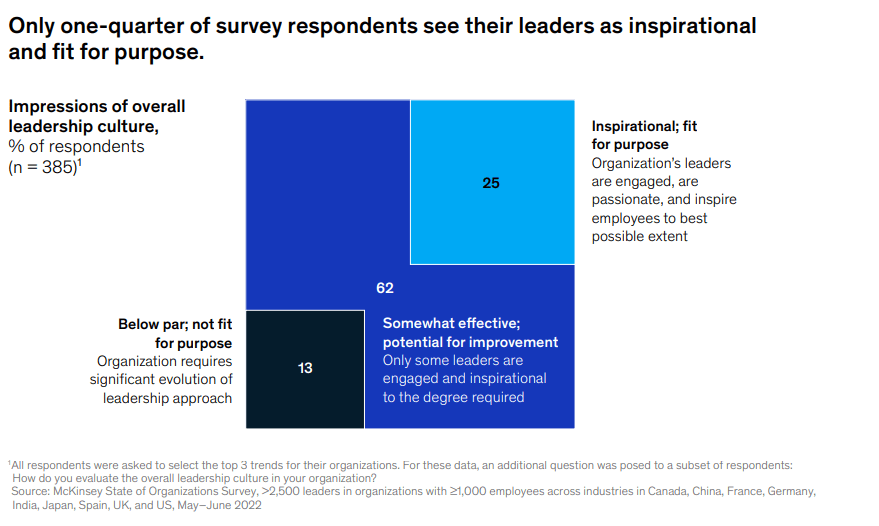
I assume the majority of the quarter of respondents seeing their leaders as inspirational and fit-for-purpose were in fact the leaders in their respective organizations.
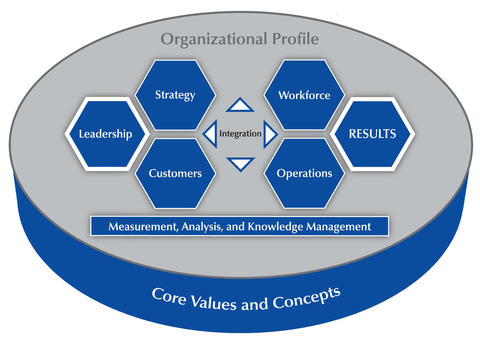
We shouldn’t talk about organization efficency without talking about effectiveness and excellence. I relly wish folks would widely adapt the principles of organizational excellence.
As usual, interesting information with some poor or impartial takes published by an organization that should be RICO’ed out of existence and join the Arthur Anderson graveyard of consulting companies.
Discussions about Industry 4.0 and Quality 4.0 often focus on technology. However, technology is just one of the challenges that Quality organizations face. Many trends are converging to create constant disruption for businesses, and the Quality unit must be ready for these changes. Rapid changes in technology, work, business models, customer expectations, and regulations present opportunities to improve quality management but also bring new risks.
The widespread use of digital technology has raised the expectations of stakeholders beyond what traditional quality management can offer. As the lines between companies, suppliers, and customers become less distinct, the scope of quality management must expand beyond the traditional value chain. New work practices, such as agile teams and remote work, are creating challenges for traditional quality management governance and implementation strategies. To remain relevant, Quality leaders must adapt to these changes..
Challenge
Means
Impact to Quality Management
How to Prepare
Advanced Analytics
The increase in data sources and improved data processing has led to higher expectations from customers, regulators, business leaders, and employees. They expect companies to use data analytics to provide advanced insights and improve decision-making.
Requires a holistic approach that allows quality professionals to access, analyze and apply insights from structured and unstructured data
Quality excellence will be determined by how quickly data can be captured, analyzed, shared and applied
Develop a talent strategy to recruit, develop, rent or borrow individuals with data analytics capabilities, such as data science, coding and data visualization
Hyper-Automation
To become more efficient and agile in a competitive market, companies will increasingly use technologies like RPA, AI, and ML. These technologies will automate or enhance tasks that were previously done by humans. In other words, if a task can be automated, it will be.
How to ensure these systems meet intended use and all requirements
Algorithm-error-generated root causes
Develop a hyperautomation vision for quality management that highlights business outcomes and reflects the use cases of relevant digital technology
Perform a risk-based assessment with appropriate experts to identify critical failure points in machine and algorithm decision making
Virtualization of Work
The shift to remote work due to COVID-19, combined with advancements in cloud computing and AR/VR technology, will make work increasingly digital.
Rethink how quality is executed and governed in a digital environment.
Evaluate current quality processes for flexibility and compatibility with virtual work and create an action plan.
Uncover barriers to driving a culture of quality in a virtual working environment and incorporate virtual work-relevant objectives, metrics and activities into your strategy.
Shift to Resilient Operations
Prioritizing capabilities that improve resilience and agility.
Adapt in real-time to changing and simultaneously varying levels of risk without sacrificing the core purpose of Quality
Enable employees to make faster decisions without sacrificing quality by developing training to build quality-informed judgment and embedding quality guidance in employee workflows.
Identify quality processes that may prevent operational resilience and reinvent them by starting from scratch, ruthlessly challenging the necessity of every step and requirement.
Ensure employees and new hires have the right skill sets to design, build and operate a responsive network environment.
Rise of Inter-connected Ecosystems
The growth of interconnected networks of people, businesses, and devices allows companies to create value by expanding their systems to include customers, suppliers, partners, and other organizations.
Greater connectivity between customers, suppliers, and partners provides more visibility into the value chain. However, it also increases risk because it can be difficult to understand and manage different views of quality within the ecosystem.
Map out the entire quality management ecosystem model and its participants, as well as their interactions with customers.
Co-develop critical-to-quality behaviors with strategic partners.
Strengthen relationships with partners across the ecosystem to capture and leverage relevant information and data, while at the same time addressing data privacy concerns.
Digitally Native Workforce
Shift from digital immigrants (my generation and older) to digital natives who are those people who have grown up and are comfortable with computers and the internet. Unlike other generations, digital natives are so used to using technology in all areas of their lives that it is (and always has been) an integral, necessary part of their day-to-day.
Increased flexibility leads to a need to rethink the way we monitor, train, and incentivize quality.
Connecting the 4 Ps: People, Processes, Policies and Platforms
Identify and target existing quality processes to digitize to offer desired flexibility.
Adjust messages about the importance of quality to connect with values employees care about (e.g., autonomy, innovation, social issues).
Customer Expectation Multiplicity
Customer expectations evolve quickly and expand into new-in-kind areas as access to information and global connectedness increases.
Develop product portfolios, internal processes and company cultures that can quickly adapt to rapidly changing customer expectations for quality.
Identify where hyperautomation and predictive capabilities of quality management can enhance customer experience and prevent issues before they occur.
Increasing Regulatory Complexity
The global regulatory landscape is becoming more complex as countries introduce new regulations at different rates. Increased push for localization.
Need strong system to efficiently implement changes across different systems, locations, and regions while maintaining consistent quality management throughout the ecosystem.
Coordinate a structured regulatory tracking approach to monitor changing regulatory developments — highly regulated industries require a more comprehensive approach compared to organizations in a moderate regulatory environment
Challenges to Quality Management
The traditional Value Proposition of quality management is no longer sufficient to meet the expectations of stakeholders. With the rise of a digitally native workforce, there are new expectations for how work is done and managed. Business leaders expect quality leaders to have full command of operational data, diagnosing and anticipating quality problems. Regulators also expect high data transparency and traceability.
The value proposition of quality management lies in predicting problems rather than reacting to them. The primary objective of quality management should be to find hidden value by addressing the root causes of quality issues before they manifest. Quality organizations who can anticipate and prevent operational problems will meet or exceed stakeholder expectations.
Our organizations are on a journey towards utilizing predictive capabilities to unlock value, rather than one that retroactively solves problems. Our scope needs to be based on quality being predictive, connected, flexible, and embedded. For me this is the heart of Qualty 4.0.
Quality management should be applied across a multitude of systems, devices, products, and partners to create a seamless experience. This entails transforming quality from a function into an interdisciplinary, participatory process. The expanded scope will reach new risks in an increasingly complex ecosystem. The Quality unit cannot do this on its own; it’s all about breaking down silos and building autonomy within the organization.
To achieve this transformation, we need to challenge ourselves to move beyond top-down and regimented Governance Models and Implementation Strategies. We need to balance our core quality processes and workflows to achieve repeatability and consistency while continually adjusting as situations evolve. We need to build autonomy, critical thinking, and risk-based thinking into our organizational structures.
One way to achieve this is by empowering end-users to solve their own quality challenges through participatory quality management. This encourages personal buy-in and enables quality governance to adapt in real-time to different ways of working. By involving end-users in the process of identifying and solving quality issues, we can build a culture of continuous improvement and foster a sense of ownership over the quality of our products and services.
The future of quality management lies in being predictive, connected, flexible, and embedded.
Predictive: The value proposition of quality management needs to be predicting problems over problem-solving.
Connected: The scope of quality management needs to extend beyond the value chain and connect across the ecosystem
Flexible: The governance model needs to be based on an open-source model, rather than top-down.
Embedded: The implementation strategy needs to shift from viewing quality as a role to quality as a skill.
By embracing these principles and involving all stakeholders in the process of continuous improvement, we can unlock hidden value and exceed stakeholder expectations.
Deaing with these challenges and implications requires the Quality organization to treat transformation like a Program. This program should have four main initiative areas:
Build the capacity for targeted prevention through targeted data insights. This includes building alliances with IT and other teams to have the right data available in flexible ways but it also includes the building of capacity to actually use the data.
Expand quality management to cover the entire value network.
Localize Risk Management to Make Quality Governance Flexible and Open Source.
Distribute Tasks and Knowledge to Embed Quality Management in the Business.
Across these pillars the program approach will:
Assess the current state: Identify areas requiring attention and improvement by examining existing People, Processes, Policies and Platforms. This comprehensive assessment will provide a clear understanding of the organization’s current situation and help pinpoint areas where projects can have the most significant impact
Establish clear objectives: Establish clear objectives to h provide a clear roadmap for success.
Prioritize foundational elements: Prioritize building foundational elements. Avoid bells-and-whistles for their own sake.
Develop a phased approach: This is not an overnight process. Develop a phased approach that allows for gradual implementation, with clear milestones and measurable outcomes. This ensures that the organization can adapt and adjust as needed while maintaining ongoing operations and minimizing disruptions.
Collaborate with stakeholders: Engage stakeholders from across the organization,to ensure alignment and buy-in. Create a shared vision for the initiative to ensure that everyone is working towards the same goals. Regular communication and collaboration among stakeholders will foster a sense of ownership and commitment to the transformation process.
Continuously monitor progress: Regularly review the progress, measuring outcomes against predefined objectives. This enables organizations to identify any potential issues or roadblocks and make adjustments as necessary to stay on track. Establishing key performance indicators (KPIs) will help track progress and determine the effectiveness of the Program.
Embrace a culture of innovation: Encourage a culture that embraces innovation and continuous improvement. This helps ensure that the organization remains agile and adaptive, making it better equipped to take advantage of new technologies and approaches as they emerge. Fostering a culture of innovation will empower employees to seek out new ideas and solutions, driving long-term success.
Invest in employee training and development: It is crucial to provide employees with the necessary training and development opportunities to adapt to new technologies and processes. This will ensure that employees are well-equipped to handle the changes brought about by these challenges and contribute to the organization’s overall success.
Evaluate and iterate: As the Program unfolds, it is essential to evaluate the results of each phase and make adjustments as needed. This iterative approach allows organizations to learn from their experiences and continuously improve their efforts, ultimately leading to greater success.
A Door Opens – Making Space for Innovation facilitated by Keith McCandless and Nancy White
“Notice and stop counterproductive behaviors that stifle creativity and innovation”
I felt they struggled to explain the concept of a TRIZ and the breakouts struggled to have an impact as a result. In hindsight, it was definitely a bit of my coming at the methodology a little too vigorously from my quality background. So a bit of an learning moment for me.
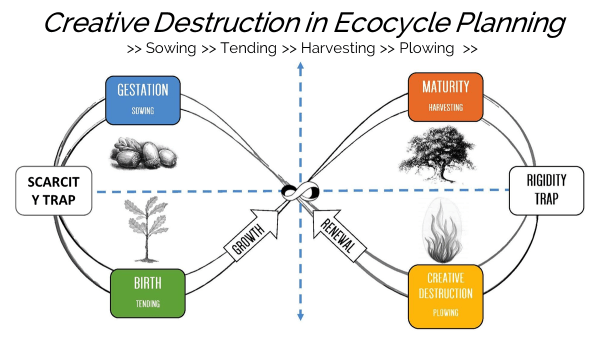
I’ll be contemplating this picture for weeks. There was a lot to absorb.
The NeuroScience of Teaming by Dr Michael Platt and Elizabeth Johnson
Start with the need to make time to socialize with coworkers at work. Back to the idea of fun.
Good relationships are critical in business. Finding ways to connect is critical for well-being. We are wired to connect.
The need to practice our social networking and skills. I feel that these days, so often I feel out of shape here after the last few weeks.
Our attention is one of the aspects of our neurobiology we have control over and through attention we can prioritize what our brain processes.
All about meeting structure comes back to managing attention. Discusses how eye contact causes processes in brain that link to team work and trust, and how this is an engineering challenge.
Importance of breaks.
All comes back to building relationships. I was interested in there is causal evidence here around synchronizing as a biomarker.
Perspective taking – shifting frame of reference to someone else’s.
Impact of the hierarchy on perspective taking. It’s not good.
We can create benefits that live beyond this workshop
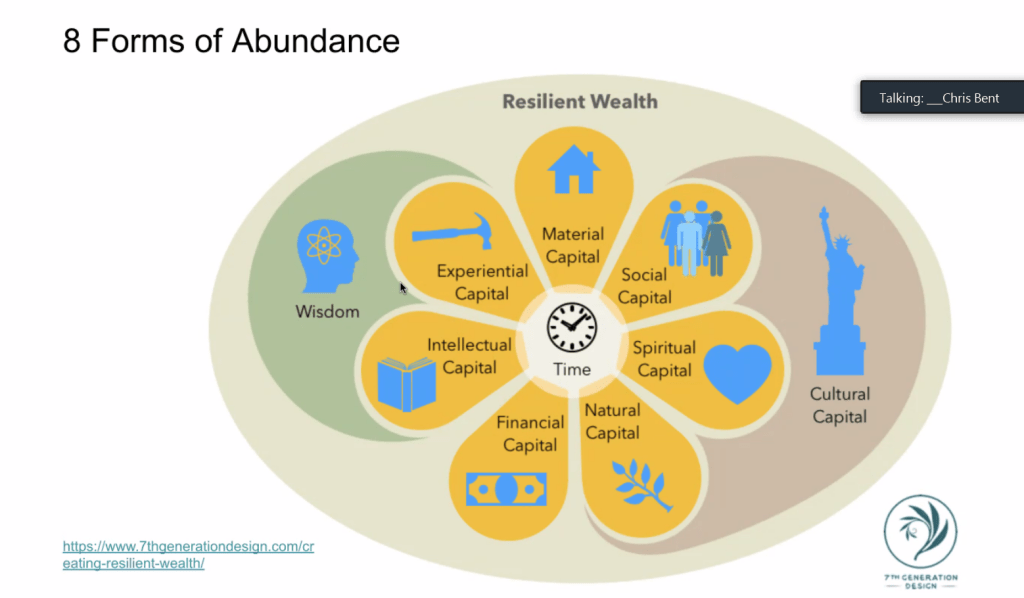
Love the concept that the act of receiving help and knowledge is part of our being generous towards our peers. Thinking of abundance and applying it in professional development is a favorite topic of mine.
Deliberately thinking of what abundance I have that may help others fill their needs, and sharing what challenges I need help on was a powerful way to end my day.
Events should always walk-the-walk. What are we told we need to do?
Ensure everyone understands the purpose, the desired outcome, the manner of interaction
Cover the technology. Make sure there is room for mistakes and what to do when it happens
Engage people early and often
The symposium started strong here. And it was great to see so many excited individuals ready to engage.
How to Unlock Creativity Through the Power of Play – Charlie Hoehn
Steve Job (or in this case Steve Jobs adjacent) anecdotes are usually a way to make me groan a little. The guy was not a good person to emulate. And anyone now associated with Tesla is probably someone I don’t want to meet.
I like the Stuart Brown quote of the “Opposite of play isn’t work it’s depression.”
Stresses the key of enthusiastically saying yes. Of co-workers as playmates and work as play.
What stands in the way of you and team feeling safe to play?
What activities would allow you to “play the fool” around your co-workers?
All work and no play leads to culture of fear. Leads to burnout.
Ways to make office creative
Walking meetings
Company outings during work
Company potlucks during work
Contests during work
Playful cues with no obligations to use them
RECESS – The act of stepping away creates creativity
Great question – how do we incentive play in the workplace.
Started kind of weak (and I resicovered my dislike of quoting) but very valuable session. I’ll read his work.
When Virtual Communication Might Curb Creativity – Dr Melanie Brucks
“Can we collaborate when interact on-line”
Shared environment and visual focus and the influence on divergent thinking and convergent thinking is pretty interesting. The mimicking of experiences.
The rating scale for creativity is fascinating. Something we talk about a lot in idea management. Need to followup on this.
Great science dose to start thinking about creativity and work.
Understanding the Power of Environmental Space on Creativity, Collaboration, and Innovation – Matt Chadder
Environmental space capturing attention is a critical thing for design of workspace. I’m shocked we aren’t talking about this more in Lean circles.
I need to read more about this. There’s something deep here for GxP spaces and human error reduction.
Rest spaces – the company cafeteria – as the number one place to manage stress. Looking forward to discussing that in a continuous improvement issue. No surprise hospitals are Matt’s reference.
Environmental spaces to reset culture (3-4 days to seed the new behavior)
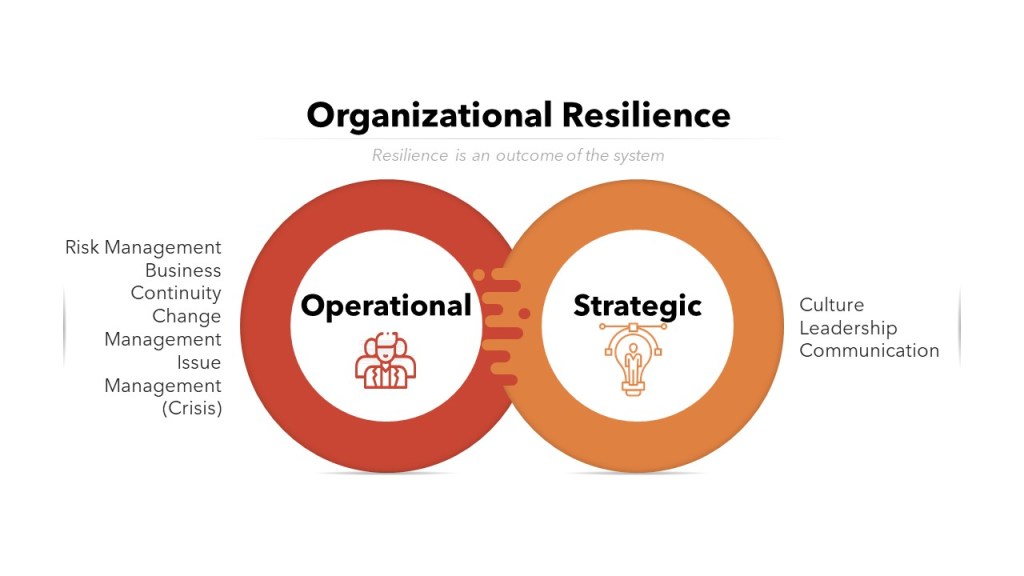
In the current world scenario, which is marked by high volatility, uncertainty, complexity, and ambiguity (VUCA), threats are increasingly unforeseen. As organizations, we are striving for this concept of Resilience.
Resilience is one of those hot words, and like many hot business terms it can mean a few different things depending on who is using it, and that can lead to confusion. I tend to see the following uses, which are similar in theme.
Where used
Meaning
Physics
The property of a material to absorb energy when deformed and not fracture nor break; in other words, the material’s elasticity.
Ecology
The capacity of an ecosystem to absorb and respond to disturbances without permanent damage to the relationships between species.
Psychology
An individual’s coping mechanisms and strategies.
Organizational and Management studies
The ability to maintain an acceptable level of service in the face of periodic or catastrophic systemic and singular faults and disruptions (e.g. natural disasters, cyber or terrorist attacks, supply chain disturbances).
For our purposes, resilience can be viewed as the ability of an organization to maintain quality over time, in the face of faults and disruptions. Given we live in a time of disruption, resilience is obviously of great interest to us.
In my post “Principles behind a good system” I lay out eight principles for good system development. Resilience is not a principle, it is an outcome. It is through applying our principles we gain resilience. However, like any outcome we need to design for it deliberately.




 Investigations of a Dog