Enabling the Process Owner to Drive Improvement

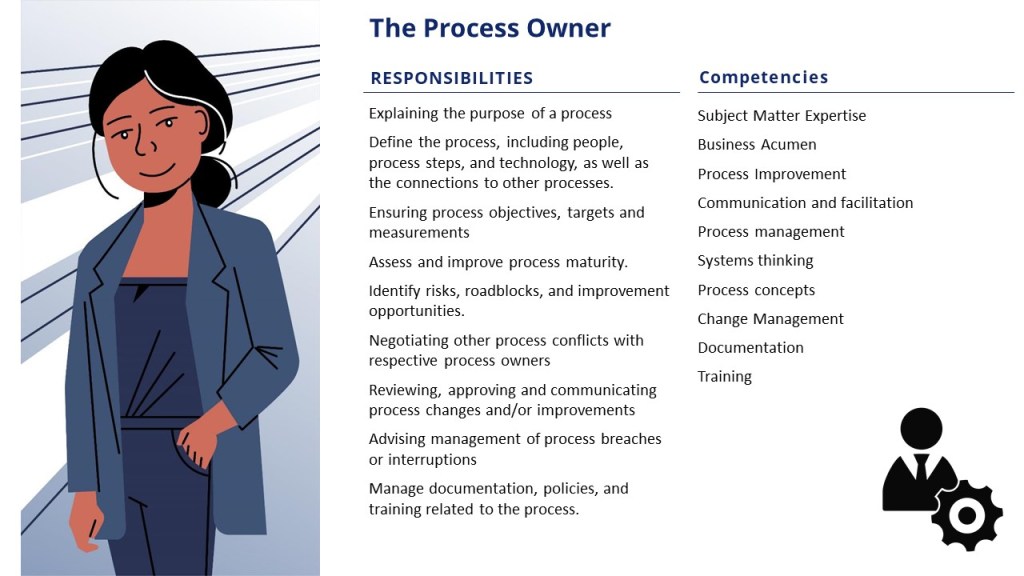
The process owner is a central part of business process management yet is often the one we take for granted. In this session, the speaker will share through case study how organizations can build strong process owners and leverage them to drive improvement in a highly regulated environment. Participants in this session will learn: ~how to identify process owners and competencies for success, ~how to build a change management program that leverages process owners as the guiding coalition, and ~how to create and execute a training program for process owners

2022 ASQ WORLD CONFERENCE ON QUALITY & IMPROVEMENT

The presentation I gave at the 2022 World Conference on Quality & Improvement.

Is There Equity in Out of Office?

I think many of us are considering what work looks like, grappling with a return to offices, hybrid situations, and being fully remote. I think the media focuses rather extensively on companies like Apple, where a good chunk of the workforce seems to be up-in-arms about a mandatory return to the office.

In the pharma world, things are a little more complicated, especially as it applies to the quality profession.

At the heart sits the question, what sort of labs and manufacturing facilities do you have on site? This physical presence requires that certain employees be on-site. Which in most pharmas makes a bundle of those who must be on-site, and those who do not need to be on-site.

I understand the desire for those who can work remotely to want to work remotely. There are a lot of good reasons for working remotely, and I personally chose a company that was purely remote for a chunk of those.

But, and this is a big but, what does equity look like?

Take for example an average quality department. It is broken down into those who support labs, manufacturing, clinical trials and post-marketing surveillance (for simplicity). You thus have in the same department individuals who must be always on-site; who need to show up a few days a week; and those who can do their job perfectly well remotely. To complicate matters you might even have a big chunk of your partners (all those clinical trial, medical affairs, pharmacovigilance folks) that have no attention of coming back to the office.

So, what does equity look like? How do you treat these three camps? How to you compensate those who come into the office, that have commutes on top of their days that co-workers do not? How do you ensure everyone has equal opportunity to be seen, heard and participate? What does this organization look like?

I thnk this is one of the major challenges for quality organizations moving forward. I do not think there is one size fits all, and there is no easy answer.

Brain-Friendly Principles for Document Design

Whether creating Work-as-Prescribed in our documents, or Work-as-Instructed in our training materials, it is important to consider good cognitive practices. If we start from two principles we quickly can start doing some amazing things.

  1. Organize resources so it’s easy to understand. Reduce cognitive load by breaking information down into small, digestible chunks and arranging them into patterns that make sense to the individual. Always start by giving an overview so individuals know how all the smaller chunks fit together.
  2. Use visuals. The brain has an incredible ability to remember visual images so you must exploit that as you look for ways to reinforce key learning points. Create tools that are primarily visual rather than word-based. Use images in place of text (or at least minimize the text). Use videos and animations to help people understand key concepts.

We can drive a lot of effectiveness into our processes by structuring information to make complex documents more transparent and accessible to their users. Visual cues can provide an ‘attention hierarchy’, making sure that what is most important is not overlooked. People tend to find more usable what they find beautiful, and a wall of text simply looks scary, cumbersome, and off-putting for most people. I am a strong advocate of beauty in system design, and I would love to see Quality departments better known for their aesthetic principles and for tying all our documents into good cognitive principles.

Cognitive Load Theory

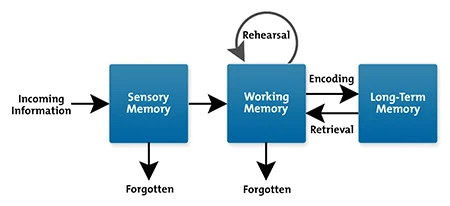
Cognitive load theory (CLT) can help us understand why people struggle so much in reading and understanding contracts. Developed by John Sweller, while initially studying problem-solving, CLT postulates that learning happens best when information is presented in a way that takes into consideration human cognitive structures. Limited working memory capacity is one of the characteristic aspects of human cognition: thus, comprehension and learning can be facilitated by presenting information in ways minimizing working memory load.

Adapted from Atkinson, R.C. and Shiffrin, R.M. (1968). ‘Human memory: A Proposed System and its Control Processes’. In Spence, K.W. and Spence, J.T. The psychology of learning and motivation, (Volume 2). New York: Academic Press. pp. 89–195

Structure and Display

Information structure (how the content is ordered and organized) and information display (how it is visually presented) play a key role in supporting comprehension and performance. A meaningful information structure helps readers preserve continuity, allowing the formation of a useful and easy-to-process mental model. Visual information display facilitates mental model creation by representing information structures and relationships more explicitly, so readers do not have to use cognitive resources to develop a mental model from scratch.

Leveraging in your process/procedure documents

Much of what is considered necessary SOP structure is not based on how people need to find and utilize information. Many of the parts of a document taken for granted (e.g. reference documents, definitions) are relics from paper-based systems. It is past time to reinvent the procedure.

Adapting and Experimenting – the Role of a New Quality Leader

I think a common challenge is how do we as a new quality professional joining an organization replicate the same success we have had in past roles

Quality requires a support structure, and I think it is easy to underestimate the impact of the absence, or the lack of, that structure. Just parachuting quality professionals into different organizations where they are left without the scaffolding they’ve implicitly grown to expect and depend on can lead to underperformance. Some adapt, of course, but others flounder, especially when hired with daunting short-term expectations, which can often be the case in organizations looking to remediate gaps in a fast way. I think this is only exacerbated as a result of the pandemic.

Culture can have a steep learning curve and being able to execute requires being very well-versed in the culture of an organization. You have to know how your organization works in order to get it to work diligently like a well-oiled machine to execute the higher-level quality vision.

Learning the culture doesn’t mean simply parroting the oft-repeated mantras received during orientation, but truly internalizing it to an extent where it informs every small decision and discussion. At the best of times, that’s difficult and takes time, particularly as there isn’t usually a single monolithic culture to learn, but myriad microcultures in various different parts of the organization. Doesn’t matter the size, this is a challenge.

In the worst case, where an organization has a culture diametrically opposite to that of the previous workplace, “learning the culture” also requires un-learning almost everything that led people to get to their current level in the first place. The humility to strive to turn themselves into the leader the organization truly needs, rather than the leader they’ve grown to be over the past years, is a hard one for many of us. Especially since we are usually brought on board to build and remediate and address deficiencies.

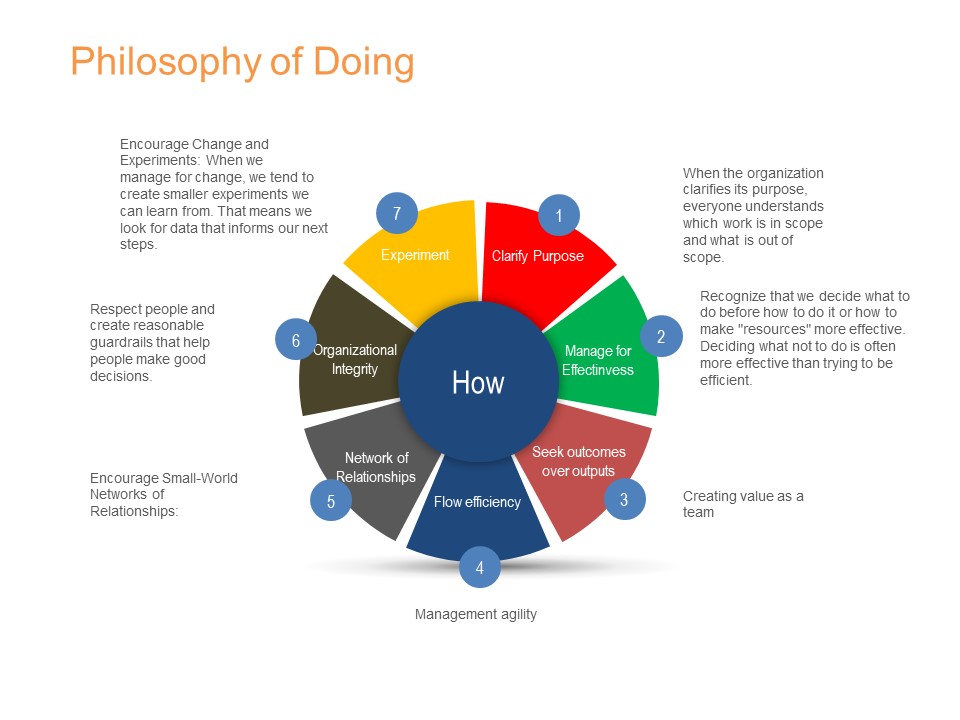
To be a successful agent of change one has to adapt to the current culture, try experiments to accelerate change, and do all the other aspects of our job.

This is hard stuff, and a part of the job I don’t think gets discussed enough.

Metrics Plan

A Metrics Plan describes how an organization intends to establish, implement, fund, collect, analyze, and report metrics. A Metrics Plan:

  • Ensures that the correct metrics are collected
  • Ensures that metric analysis and reporting meet all stakeholder needs
  • Ensures that adequate and appropriate resources (e.g., funding, personnel, tools) are available to properly perform metrics implementation, collection, and ongoing support.
  • Ensures that appropriate change management activities are undertaken

This is one of those that can be done at several levels, and it usually has several cuts, from a top-level strategic document to the process owner level to potentially deeper cuts lower in the organization. I am a big fan of each process owner owning their parts and it passing up.

This plan is a critical feed-in to quality management review.

A typical structure of a Metrics plan includes:

  • Strategy
    • Rationale and Desired Outcomes
    • Metrics Framework
    • Success Criteria
  • Implementation Plan
    • Steps, Timelines & Milestones
    • Resources
    • Governance
    • Communication
    • Training
  • Specific Metrics
    • Outcome Mapping
    • Outcome Action Plan
    • ROI Evaluation
    • Routine Analysis & Improvement Evaluation
    • Retirement Plan
  • Data Collection
    • Data Sources
    • Data Flow
    • Resources
    • Reconciliation
  • System & Technology
    • Data Visualization
    • Support
  • Communication Plan
  • Sustainability Plan