WCQI 2022 Day 2

Ugwem Eneyo’s keynote this morning was interesting and the type of inspiring keynote about the importance of quality that I love to hear.

QMS for Data-Driven Decision-Making

Charles Cox starts up being a little by blurring the differences between a Quality Management System (QMS) and an electronic Quality Management System (eQMS), but quickly solidified his topic of how to foundational build digital data into the QMS in an iterative approach for decision data decision-marking and growth.

I appreciate a quality-function-deployment (QFD) approach, a tool-set that I feel folks take a little for granted and don’t utilize enough. Charles co-wrote a useful text on QFD back in the 90s, but I really haven’t read a lot from him in recent years, so this presentation is an excellent example of a practical application, updated for today.

The focus on thinking today about the needs of the future is one that we cannot stress enough. Future sense-making is a core competency for quality professionals and one we do not spend enough time discussing and performing deliberative practice on.

Aligning Organizational Structure with Quality 4.0 by Jane Keathley

Jane co-wrote a thought provoking book on organizational design – Structuring Your Organization For Innovation.

I’m always surprised when folks refer to open office plans in a positive light. The research is pretty definitive on the destructive aspects here.

Thinking about the various organization chart structures is key. In pharma, the regulations are pretty clear on the need to do this, I think a lot of organizations struggle on how to build their organizations for quality. Color me a bit pessimistic here, but I want to see network structures work but have not had the experience.

The four criteria or organizational structures influence on performance: formality, hierarchy, complexity, technology.

Provides three perspectives for organization design: Strategic, Operational, Tactical.

I think there could have been a whole session just on the vision matrix. Same for organizational network analysis. Both of these are tools I do not think enough quality folks are comfortable with. Would make a good workshop.
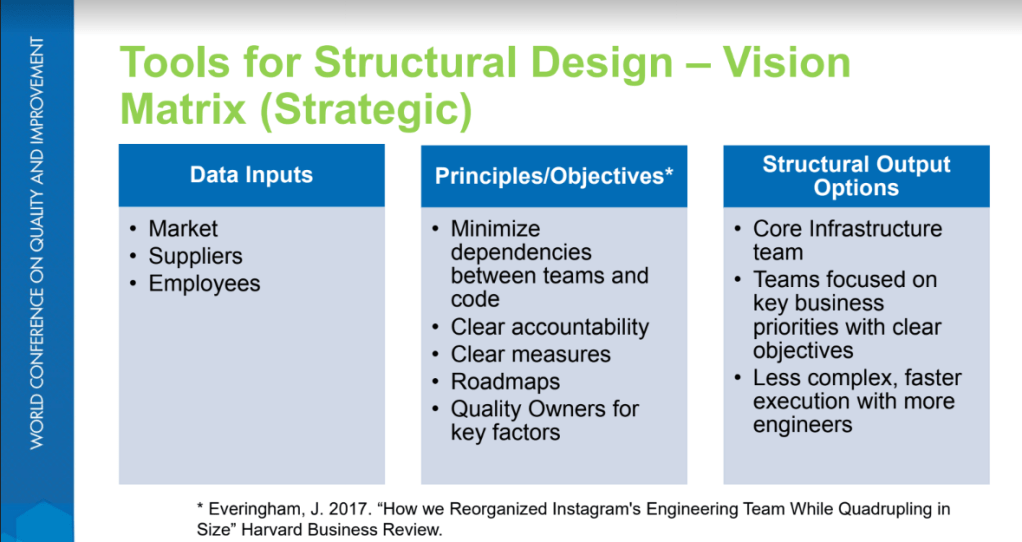
tratVision Matrix – the Strategic Perspetive

And I got a free book for being a know-it-all about holacracy, which means I now have 2. I’ll keep this copy because I’ll get it signed, and pass off the copy at home.

I should put McKinsey on my junk science bingo card. Support for a criminal enterprise seems to be pretty garbage.

Key message – push decision making and autonomy down as low as possible.

And then I spoke

Good turn out. I was happy with the volume of questions.
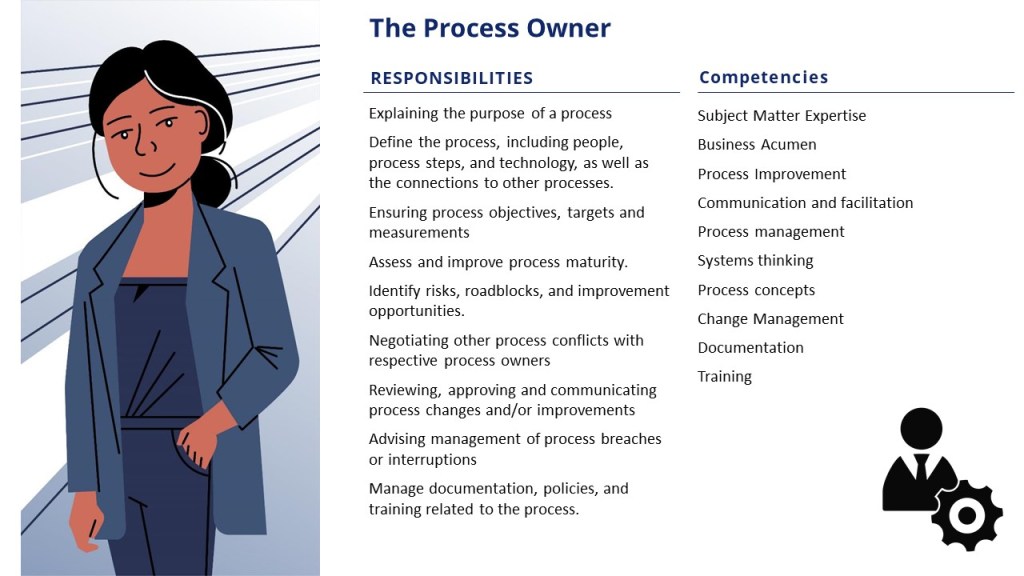
Enabling the Process Owner to Drive Improvement

The process owner is a central part of business process management yet is often the one we take for granted. In this session, the speaker will share through case study how organizations can build strong process owners and leverage them to drive improvement in a highly regulated environment. Participants in this session will learn: ~how to identify process owners and competencies for success, ~how to build a change management program that leverages process owners as the guiding coalition, and ~how to create and execute a training program for process owners

2022 ASQ WORLD CONFERENCE ON QUALITY & IMPROVEMENT

The presentation I gave at the 2022 World Conference on Quality & Improvement.

Well, another virtual WCQI

Another, and hopefully, last virtual ASQ World Conference on Quality Improvement.

Stand out presentations:

  • John Dew’s on Metacognition, which is a critical part of reflective thinking and John is so right about it being a fundamental part of our profession. More on this one later as it has prompted a post.
  • Peter Gallagher on change management. Great slides, great summary of key points. Change management is my bread and butter and I always learn something from Peter.
  • Erin Urban “Steps for Leaders to Connect Better with Virtual Teams” is gold. Good presentation, engaging speaker and her section on creating tiny moments is pure gold.

Here are some other thoughts:

  • We need a requirement that every quote be checked. If I see one more “Culture Eats Strategy for Breakfast” attributed to Drucker I am going to cry.
  • Text heavy presentations with few graphics have got to go. Every presenter should have to attend a class on slide structure and build.
  • A virtual conference platform needs to do 3 things right – closed captioning of recorded presentations and ideally live ones, robust breakout sessions, easy to use chatting. The one used could use some work in all three areas. I would love to have seen a platform that easily integrated with the ASQ app on my phone as well.
  • My junk science bingo card is kind of full.
  • There is a very real discussion to be had about the use of the Service Mark in presentations when all someone is doing is using a standard tool (an annotated swimlane is not unique). The ASQ can be accused of being too much dominated by consultant companies and I think balance is important here.
  • Not understanding the sticking to 4:3 aspect ratio slides. 16:9 is better for conferences and video.

Virtual events are important, they enable inclusion. While I miss face-to-face events I do believe we should have a mix of events going forward. events that are more than passive webinars. So sick of webinars. Looking forward to experiments in making that blend happen. We’re experimenting with a storytelling event in the Team and Workplace Excellence Forum.

Virtual WCQI

The ASQ is hosting a virtual World Conference on Quality Improvement. Glad to see thisexperiment. While a lot of organizations have been holding virtual conferences, this use of technology is a stretch for a lot of ASQ Members.

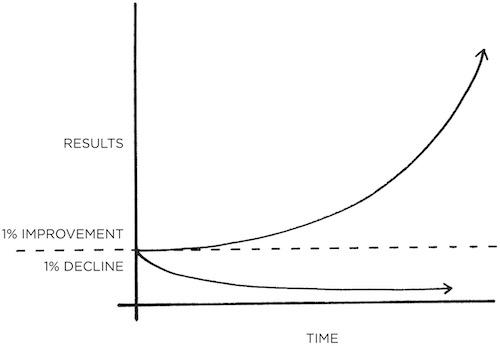
James Clear – 1% Better Every Day

Clear’s 2019 book Atomic Habits was definitely one of the most talked about self-help books from last year.

1% Better Every Day

The book has some concerns, for example do a little googling on the Marshmallow Test, and Clear still starts his talk referencing the British Cycling Team, probably not the most convincing given their doping scandals. Clear has actually written about the scandal, so I’m surprised he continues to use it in talks.

That said, I really like his use of a score card and his four rules. No argument from me on the importance of systems.

The four laws for building good habits according to Atomic Habits:

  1. Make the habit obvious.  
  2. Make it attractive
  3. Make it easy
  4. Make it satisfying  

To break bad habits the inverse applies:

  1. Make the habit invisible
  2. Make it unattractive
  3. Make it difficult
  4. Make it unsatisfying

Great discussion on how design and environment shapes our choices. Fits nicely into “nudges.” How we organize our work space and homes is a critical thing that we as quality professionals need to spend more time on. The structuring of an environment, including social, fits nicely into quality culture.

It may be pop psychology goes, but it is a very well written book. And James Clear is a great speaker, even from comfort of his living room or study.

WCQI Day 4

Last day of the conference and for the first session I present on “Knowledge Enables Change.”

Similar to my BOSCON talk, which was the beta so I think I covered things better in this one.

Expand Your Impact on the Culture of Quality by Kathy Lyall

Solid focus on both external and internal signifiers of quality culture. A little basic but very worth reinforcing.

And then I left, skipping the last keynote to get to the airport.

Good conference this year. Overall I felt that many of my choices for sessions ended up being more basic than I thought, but there is a lot of value in that. I will hopefully make the time to turn my thoughts into better blog posts.